
 Politixia


The most recent spate of commitments to institutional neutrality and the closure of DEI offices across the U.S. have coincided – not coincidentally – with enormous pressure applied by the Trump Administration, including withholding federal grants and initiating formal legal investigations. Despite this progress, further and permanent solutions are more likely to come from lower levels of government, given that higher education is primarily a state and provincial responsibility.

In Canada, Ontario and Alberta have led efforts to impose legislative obligations on universities. In 2018 Ontario required that every publicly-funded university and college publish a free speech policy. Alberta has adopted a similar measure. While welcome, both requirements lack functional enforcement mechanisms necessary to ensure students or faculty who’ve had their speech rights infringed by mobs or school administrators are properly protected. Again, there’s more work to be done.
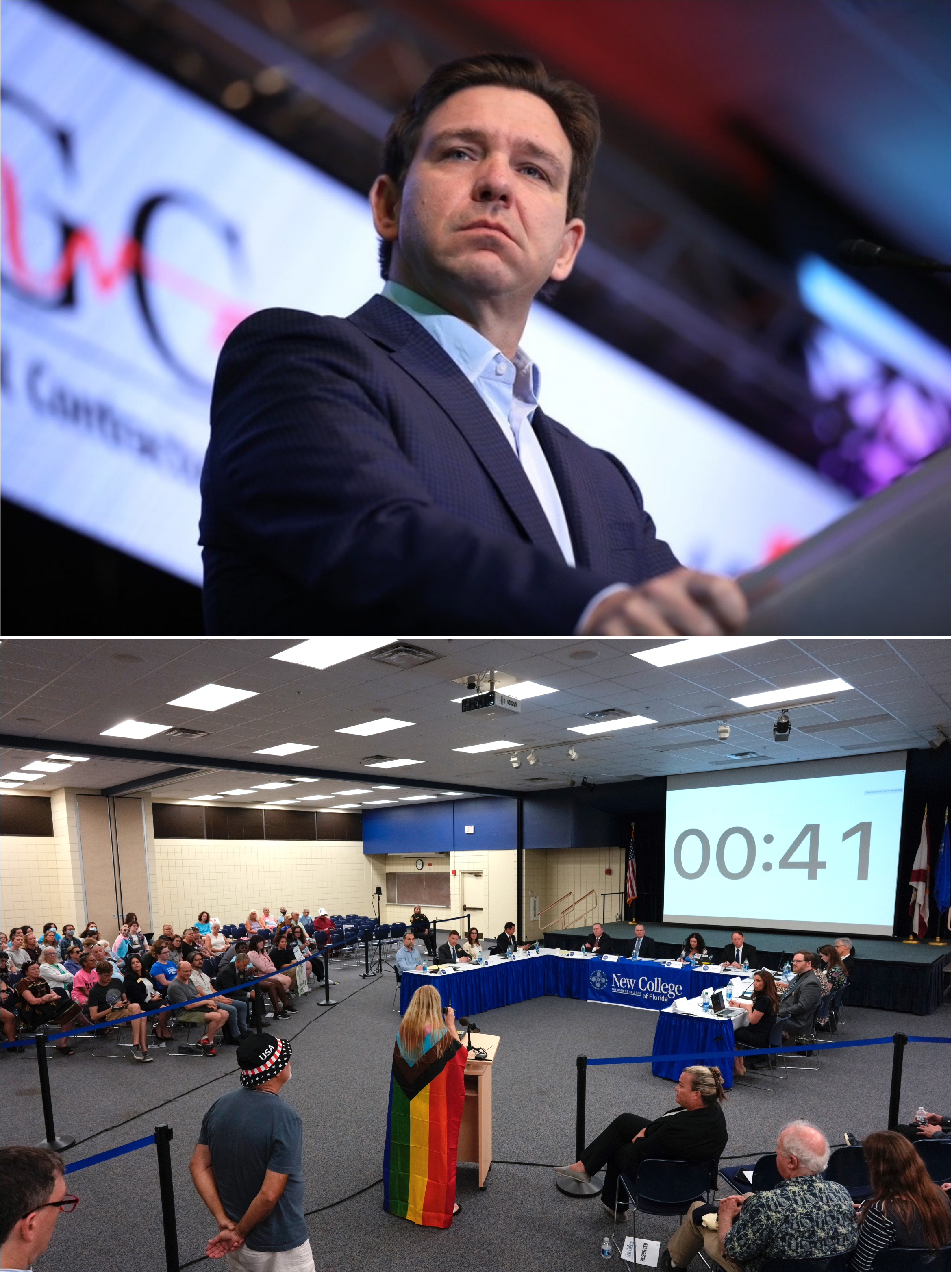
U.S. states have been far more aggressive in this regard. Florida, in particular, has enacted a suite of anti-woke education policies, with Governor Ron DeSantis signing bills defunding DEI initiatives, outlawing the imposition of ideological positions on students and faculty, and encouraging students to seek “more employable majors” instead of niche degrees in critical race theory or gender studies. While some measures have been struck down by the courts, the campaign overall has achieved a remarkable rebalancing of the state’s education establishment.
The highest-profile example may be New College of Florida, a small liberal arts college within the state university system that was long known for its fealty to radical left-wing causes. In 2023, DeSantis replaced New College’s entire board of trustees, who then fired the school president and committed the college to greater intellectual balance. Naturally enough, the reborn college has attracted critics; HBO talk show host John Oliver predictably smeared the incoming trustees with Nazi comparisons. The results three years later, however, reveal a school that now acts more like an institution of higher learning than an indoctrination factory.
Another Florida example is the newly-created Hamilton Center for Classical and Civic Education. Also part of the state university system, it supports “teaching and research concerning the ideas, traditions, and texts that form the foundations of Western and American civilization.” The Hamilton Center has helped create new courses and majors for the much bigger University of Florida, including a civil discourse class.
From Whole Cloth
The surest response to the scourge of institutionalized academic leftism is a root-and-branch rethink of the entire concept of a university. A few private Christian colleges in the U.S. – most notably Hillsdale College in Michigan and Liberty University in Virginia – have styled themselves as explicitly conservative institutions, and thus serve as a bulwark against wokism in higher education.
Given that explicitly Christian colleges are likely to be overlooked or avoided by many students and parents, however, the optimal solution probably lies in the creation of non-sectarian schools dedicated to the fundamental principles of open inquiry within the Western tradition, and entirely unencumbered by past decades of institutional drift. The most ambitious example of this clean-slate approach is the University of Austin at Texas (UATX).
The creation of a brand-new university as pushback against the “rising tide of illiberalism and censoriousness prevalent in America’s universities” was announced in 2021 on journalist Bari Weiss’ Substack in a post by the school’s future president, Pano Kanelos. Three years later, UATX enrolled its inaugural class of 94 students. Each student received a copy of Homer’s Odyssey in recognition of the school’s debt to the Western canon.
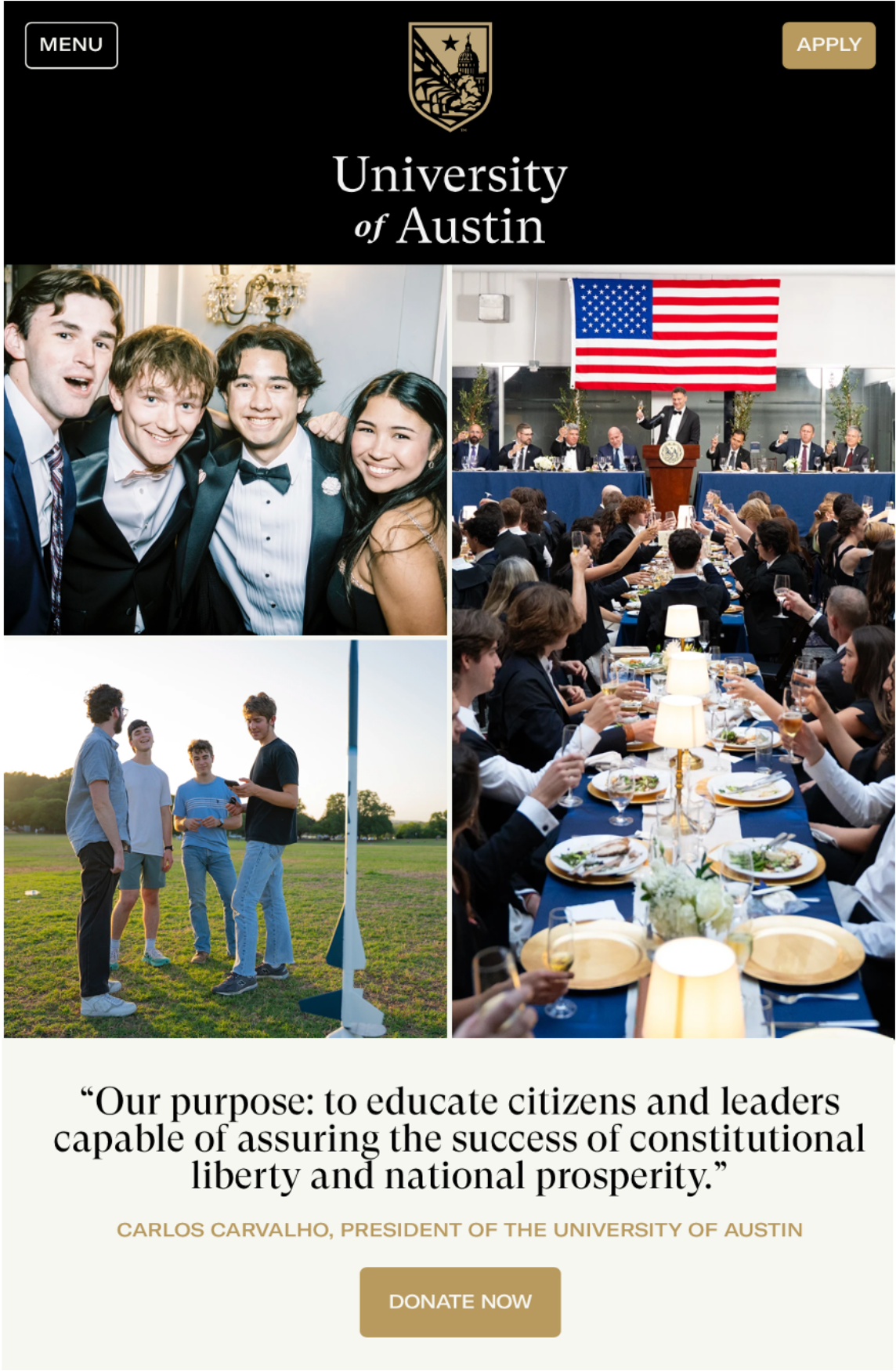
Today UATX (not to be confused with the vastly larger and conventionally structured University of Texas at Austin) has about 150 students and recently received state approval to grant degrees. To earn a B.A. in Liberal Studies, UATX students must take 15 core courses covering a liberal arts classical education, with the option to specialize in the humanities, social sciences or science and technology. The institution expects to receive full accreditation by 2028.
UATX is notable for its “liberal” admissions policy. Marketing itself as having “the fairest and most honest admissions in America,” the school’s race-neutral entrance requirements are based entirely on test scores. Applicants who score above 1460 on the SAT (formerly the Scholastic Aptitude Test), 33 on the American College Test or 105 on the Classics Learning Test are automatically granted admission. For context, a SAT score of 1460 puts the applicant in the 96th percentile of all undergraduate applicants – but is still a more generous cutoff than for America’s most elite schools like Harvard, MIT and Yale. Furthermore, everyone attends UATX for free, with their tuition fully covered by donors. This is another major departure from the traditional university model, in which basic annual tuition tops US$60,000 at the elite schools. Such generosity helps maintain UATX’s commitment to the pursuit of excellence above all.
While many aspects of UATX’s educational experience are similar to those at other universities, there are some deliberate differences. One is the use of the Chatham House Rule in classrooms. This rule states that, “Participants are free to use the information received, but neither the identity nor the affiliation of the speaker(s), nor that of any other participant, may be revealed.” It enables students to speak freely without suffering any negative consequences from those who disagree.
As with any new offering, UATX has faced challenges. The most significant has been an apparent internal battle over whether the institution should commit itself exclusively to the principles of open inquiry and free expression, or whether it should actively promote a conservative perspective as a counterbalance to the rest of the woke-minded academy.



GIPHY App Key not set. Please check settings