
 Politixia
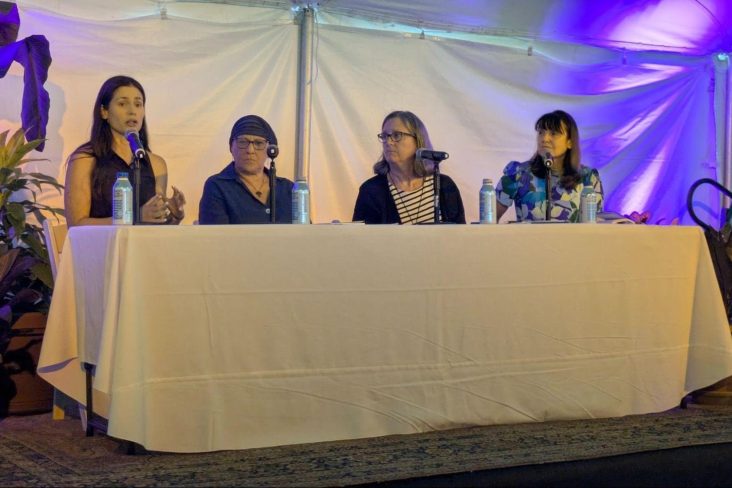

Lenox — On Wednesday, July 15, the W.E.B. Du Bois Freedom Center hosted a panel discussion at The Mount on the life and legacy of Elizabeth Freeman.

Born into slavery in Claverack-Red Mills, N.Y., around 1744, Freeman sued for her freedom and won it in 1781, more than 80 years before the Emancipation Proclamation became law in January 1863. She died in Stockbridge in 1829.
In August 2022, the town of Sheffield unveiled an eight-foot-tall bronze statue of Freeman and plaque telling her story on the town’s Village Green.
In October 2023, Great Barrington dedicated Elizabeth Freeman Way in front of Town Hall.
“Her legacy kind of explores the contradictions between enslavement and freedom,” Du Bois Freedom Center History and Interpretive Fellow Marcus Smith, who moderated the panel discussion, told The Berkshire Edge in an interview before the event. “Her legacy, in particular, shows that freedom is not something that is granted or given, or that it only exists in an abstract ideal, but it is something that needs to be constantly claimed, to be fought for, and to sacrifice for. I think this is relevant not only today, but in terms of history and generations at large.”
Smith said that discussing and teaching about the different aspects of Freeman’s life ensures her story isn’t lost to history. “We need to understand that she lived a life as a full person,” Smith said. “She is not just a person who can be wrapped around the ideal of a legal achievement. We have to look at her as a midwife, as a healer, as a defender of children, as someone who was part of a greater community. We understand that we humanize figures who are often related to significance in historical footnotes. But these people are more than just names on a lawsuit, they are full people.”
The panel included:
- Olivia Scott, Peggy N. Gerry Decorative Arts Trust Curatorial Fellow from the Trustees of Reservations;
- Jana Laiz, education coordinator for the Berkshire County Historical Society;
- Martha McNamara, associate professor of history at the University of Massachusetts in Amherst; and
- Fredie Kay, president of the Massachusetts Women’s History Center.
During the discussion, Smith asked panelists why Freeman’s story had been overlooked for so long and why interest in her life and legacy is finally growing.
Laiz recollected searching for a local historical figure to discuss during Black History Month when she was an English teacher in Pittsfield in 2001. “I went to the [school’s] librarian, and I asked if there was a book about her,” she recalled. “There was no book about her. Her story was just sort of put aside, and it just wasn’t out there in the world.”
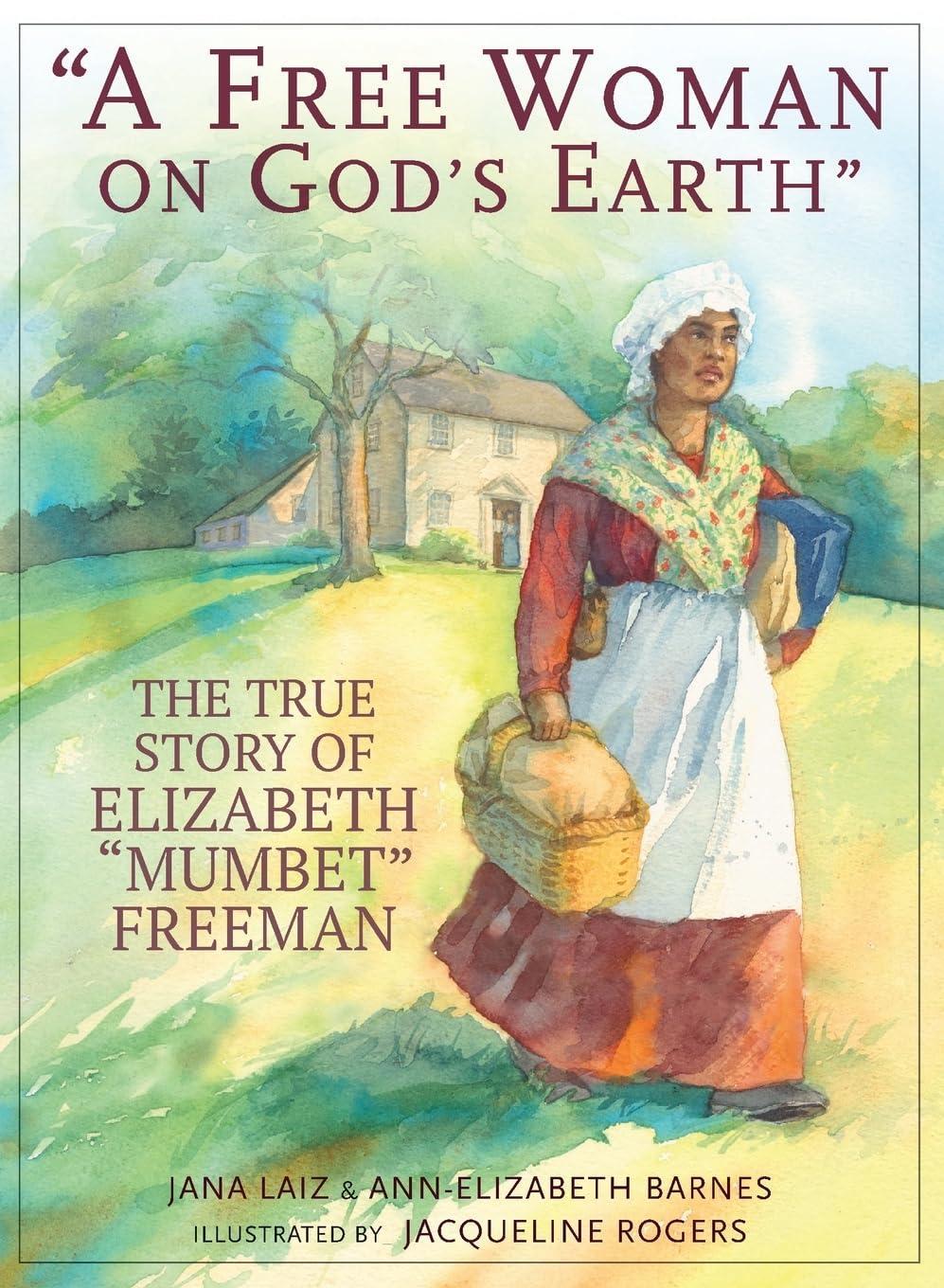
Laiz eventually wrote the children’s book “A Free Woman On God’s Earth: The True Story of Elizabeth ‘Mumbet’ Freeman,” which was published in 2009. “School children didn’t know about her, and I thought it was incredibly important that everybody knows her remarkable story,” she said.

McNamara pointed to what she called “a real amnesia about slavery in the northern United States.” “When people think about the abolition of slavery, they think about the Emancipation Proclamation,” she said. “They don’t really think about how it was that slavery was abolished in the North because they don’t know or don’t understand that slavery was very much a powerful institution in the Northern states. Another reason is that there has been this longstanding focus on the sort of great men of history. Historians have been pushing back against this for quite a long time, but it’s easy for people to think about histories in terms of the Founding Fathers. I think the sort of ordinary people who took part in revolutionary activities of all sorts have not quite gotten the attention, particularly if you’re African American and a woman and living in rural Massachusetts—those are a lot of obstacles to overcome.”
McNamara Freeman’s story is now garnering more attention because history is now focusing on “the ordinary people fighting for liberty and fighting for their rights.”
Scott said that she gives tours of the Ashley House in Sheffield as part of her position with the Trustees of Reservations.
The Trustees’s website describes the Ashley House’s connection to Freeman and slavery:
Once the center of white political and social life in Colonial Sheffield, today the Ashley House is remembered for its connection to Elizabeth Freeman, who was enslaved there before winning her freedom and dealing a deathblow to the institution of slavery in Massachusetts.
Scott emphasized that there are likely more women like Freeman whose stories have been lost to history. “One of the tricky things about history is that we have to get uncomfortable with the unknown,” she said. “Every once in a while I give a tour and I talk to people and they’re quite often frustrated by how little we know about Elizabeth Freeman, but we know there were probably other Black women slaves in the Ashley House that we don’t even know their names. These historical silences are quite structural in the way that the [historical] archive is formed, in the way that records were kept, in the way that Sheffield did not record a single birth of an enslaved Black person until the end of slavery. There are real sexual reasons why this is happening that it’s so important to acknowledge historically, and it’s OK not to have the answer, and we don’t necessarily need to fill in the blanks.”
“While [she lived] hundreds of years ago, thanks to these wonderful scholars, [history] can become more real for us, and we can see the connections with the issues that we are dealing with today,” Kay said. “I think that it is really important that we amplify these stories so that people come to know about it and recognize that we are still in the story, that it hasn’t ended, and we need to keep going.”

For more information about the Du Bois Freedom Center, visit its website.







GIPHY App Key not set. Please check settings