
 Politixia
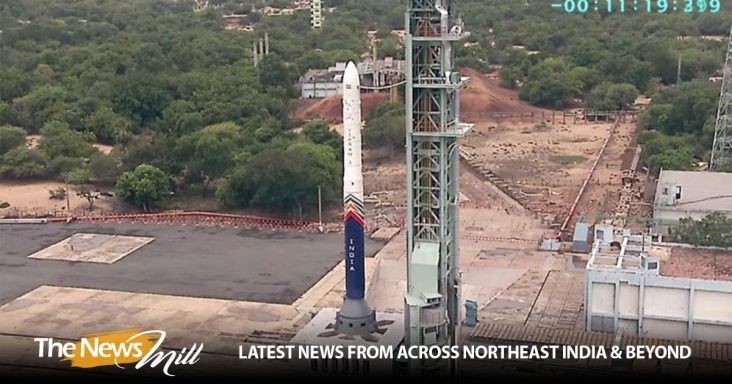

India has approximately 440 space technology startups registered, according to the DPIIT Start-up India Portal.
The Indian National Space Promotion and Authorisation Centre (IN-SPACe) has granted 113 authorisations to 52 Non-Government Entities (NGEs) to conduct various space activities. Among these, 18 are identified as start-ups, Minister of State for Atomic Energy and Space Dr Jitendra Singh informed the Rajya Sabha in a written reply earlier this week.
Stay connected
Make The News Mill your preferred source
See more TNM stories when you search for news on Google.
The 18 start-ups include Agnikul Cosmos Pvt Ltd, Akshath Aerospace Private Limited, Azista BST, Bellatrix Aerospace Pvt Ltd, Cosmoserv Space India Private Limited, Dhruva Space Private Limited, Digantara Research and Technologies Pvt. Ltd, GalaxEye Space Solutions Private Limited, HEX20Labs India Pvt Ltd, Inorbit Space Telecommunications Private Limited, Manastu Space Technologies Private Limited, NSpace Tech India Private Limited, OrbitAID Aerospace Private Limited, PierSight Space Private Limited, PixxelSpace India Private Limited, Skyroot Aerospace Private Limited, Space Kidz India, and TakeMe2Space Technologies Pvt. Ltd.
Applications for use and access to ISRO infrastructure, including the launch pads at ISRO’s Satish Dhawan Space Centre in Sriharikota, are processed according to the standard operating procedure based on applications received via IN-SPACe’s Digital Platform. An Expert Committee of IN-SPACe reviews the readiness aspects, the minister stated.
Indian private companies plan to launch two commercial rockets in the fiscal year 2026-27. The launch manifest for fiscal year 2027-28 is pending approval by IN-SPACe, with expectations of over six launches by Indian private firms.

Government data indicates that private investment in India’s space sector has increased nearly six-fold, rising from USD 100.5 million in 2021-22 to USD 618.5 million by March 31, 2026. Of this amount, USD 187 million was invested during 2026 alone.
In June 2020, the Union Cabinet, led by Prime Minister Narendra Modi, resolved to open the space sector to enable private sector participation across all space activities.
To facilitate this, the government established IN-SPACe as a single-window, independent nodal agency operating as an autonomous body within the Department of Space. By mid-2026, IN-SPACe had authorised 113 permissions to 52 Non-Government Entities, including 18 start-ups, for satellite operations, payload establishment, and launch services.








GIPHY App Key not set. Please check settings