
 Politixia

As I sit down to write my first column in six weeks, I am aware that it will come out on the day University of Guam faculty gather in faculty convocation to start the new academic year. So it seems a good time to reflect, again, on the state of the modern university.
In the past I have written plenty about the challenges facing the university today, from assaults on academic freedom, to AI, and I’m sure I will again. Today, I want to think about the threat from within, and I don’t just mean administrators, though there is plenty to say there. I also mean from faculty ourselves.
Like most academics, I have a strong attachment to the idea of the university. In this idea, the university’s unique role in a society is to foster debate, inquiry, scholarship and knowledge. It is this crucial role that justifies the peculiar privileges of the professoriat, like academic freedom, sabbatical leaves, or tenure.
One challenge to sustaining this kind of institution and culture, as I have written before, is that by their very nature universities are not financially self-sustaining. While some of the activities of professors may produce economic benefits for society, or revenue streams for the university, many don’t and in any case even those two benefits do not necessarily go together.
But I want to focus today on another challenge to the idea of a university, one that has often been written about by critics of the modern university, but not often by its defenders. This is the threat that comes from elevating certain ideas to such a pedestal that they become the basis for intolerance, censorship, and even self-censorship.
No particular points of view have a monopoly on the tendency to censor rival viewpoints. Historically, the dominant ideas of centers of learning reflected the values of the establishment. It is not an accident that the most eminent Greek philosophers defended slavery.
But this bias can still allow old orthodoxies to be challenged, and new ones to rise. As long as the contest is on the basis of who has the better argument, or the better evidence, it’s possible. But when the critics of prevailing ideas are attacked, not on the soundness of their views, but on whether their ideas reveal deep defects in their character, debate has come to an end.
This is fundamentally what arguments about “wokeness” on campus are about.
The term “woke” itself is problematic. It seems originally to have implied that some people are more “awake” to or aware of structures and biases that perpetuate power inequalities in society, particularly those that are cultural rather than economic in origin.
But today, “woke” is a descriptor used almost exclusively by people who condemn it. So a more accurate definition of “woke” today might be, “views that attack all conventional attitudes towards race, sex, gender, sexuality and culture as inherently oppressive.”
Right there, of course, we have a problem. Many of these attitudes actually are oppressive. That is, they express certain power relations in society that were not challenged before.
The trouble is that, over time, it has become very difficult, if not impossible, to debate which conventional views are actually oppressive, and which might be legitimate.
When a person questioning whether something really is oppressive is treated as evidence that the questioner is upholding the oppressive structure, then debate ends. And when this new orthodoxy is enforced through social pressure and ostracism, even thought might cease.
“Wokeness” is hardly the only intellectual and political trend to try to stamp out (or “cancel”) dissent rather than engage with it. But that fact should not blind us to the evidence that it does.
A culture of conformity is the opposite of what a university should be about, especially if that conformity is born out of fear of being ostracized or fired.

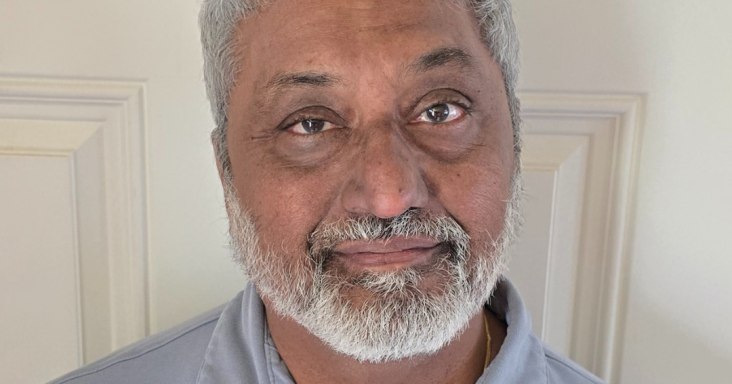
Arun R. Swamy, Ph.D., is a political scientist, labor leader and educator at the University of Guam. He writes on topics relating to all these roles. The opinions he expresses are strictly his own, and do not necessarily reflect the views of the University of Guam.







GIPHY App Key not set. Please check settings