
 Politixia
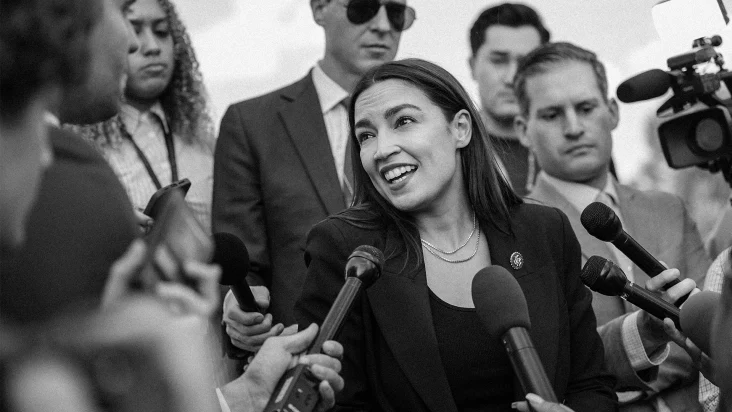

When Representative Alexandria Ocasio-Cortez said that “Woke 1.0 was crazy” on ABC News, she introduced a long-used internet term to a much wider audience.

Ocasio-Cortez was joking about how Democratic socialist Francesca Hong, then still in the running to become Wisconsin’s Democratic nominee for governor, had walked back some of the far-left stances she’d posted on social media in 2020—in the midst of so-called “Woke 1.0,” or the cultural moment of the early 2020s when Democratic politics were swinging left in a major way (or at least appeared to be).
Here’s what to know about the origin and history of the term.
What (and when) was Woke 1.0?
Though Ocasio-Cortez attributed the idea of Woke 1.0 to New York City Councilman Chi Ossé, it’s a far more widespread concept online. To unpack Woke 1.0, you have to start with “woke” itself and its ever-evolving meanings.
“Woke” originated as a slang term in the Black community dating back a century, meaning to be politically aware, especially about systemic discrimination. But as the term became more widespread in the 2010s, it took on more of an umbrella function: to be woke was to be a proponent of Black rights, LGBTQ+ rights, women’s rights, and more. For many, Woke 1.0 retroactively encompasses the social justice campaigns of the era, including the resurgence of Black Lives Matter in the wake of George Floyd’s murder and the continued #MeToo movement.
In recent years, “woke” has also become a pejorative for the political right, with some using the word to mock politics and cultural movements they see as too far left or performative. Efforts to improve DEI, for example, are often disparagingly labeled as “woke” by their critics.
Though Woke 1.0 has no concrete start or end date, as a concept, it’s centered on the far-left politics of the early 2020s. That’s when Ossé posted that “a cis white man should not be the next speaker of the council,” which he himself said was a “crazy” example of Woke 1.0 in action. It’s also when Hong called on America to “cancel Thanksgiving,” a comment that may have contributed to her loss in the primary. And it’s when Texas state representative James Talarico said that “God is non-binary,” among other controversially progressive stances that have become the subject of attack ads in his current race for U.S. Senate. One pessimistic poster speculated, “Woke 1.0 is gonna haunt Democrats for a generation.”






GIPHY App Key not set. Please check settings