
 Politixia

It’s not every day that you find out you’re descended from royalty.
Nearly 100 years ago, my Grandma Wagner was Queen Doris Parkes, reigning over the Banff Winter Carnival with an icy fist. It was right at the peak of her time as one of the best all-around athletes in B.C., if not all of Western Canada.
I have few memories of my Grandma Doris. I was just eight years old when she passed away in July of 1992, just a couple of weeks shy of her 88th birthday, and, since she lived on Vancouver Island and we lived on the mainland, trips to visit her were few and far between.
What little I remember is a woman who was sweet, kind, and full of life. And she loved to swim, preferably in the ocean, something that terrified and mystified me as a child who was, to be frank, a poor swimmer. As I would hesitate to dip my toe in the water, she would plunge headlong into the surf, cutting easily through the water to circle a buoy that floated far from the shore — miles to my young eyes.
I was told she swam every single day, right up until the day she died.
With Grandma Doris passing when I was so young and with so few visits, I never really knew her. And the more I found out about her, the more I regretted never truly knowing such a remarkable woman.
It’s my fault: I never asked about the trophies.
The various silver cups on wooden bases ringed my dad’s barn workshop on shelves above his collection of tools, old and new. While I was a little bit curious about their origins, I just assumed they had been won by my dad in his younger years or purchased from antique stores or garage sales — we were always going to garage sales.
Or maybe it was residue from growing up as a Millennial in the participation trophy era. Everyone had a wall full of trophies, right?
It wasn’t until I was older that I found out the trophies were much older than I thought. They dated back to the twenties and thirties and were won by my dad’s parents: Grandma Doris and Grandpa Bud.
The trophies with “Bud Wagner” stamped into the cups and plates were all for canoe races (and one fishing competition), as the future Forest Ranger was an avid outdoorsman, but those with my grandma’s maiden name, Doris Parkes, were for seemingly everything.
There were trophies for swimming, diving, cross-country skiing, speed skating, and, yes, canoeing, including a couple of trophies won by her and Bud as a canoeing tandem, years before they got married.
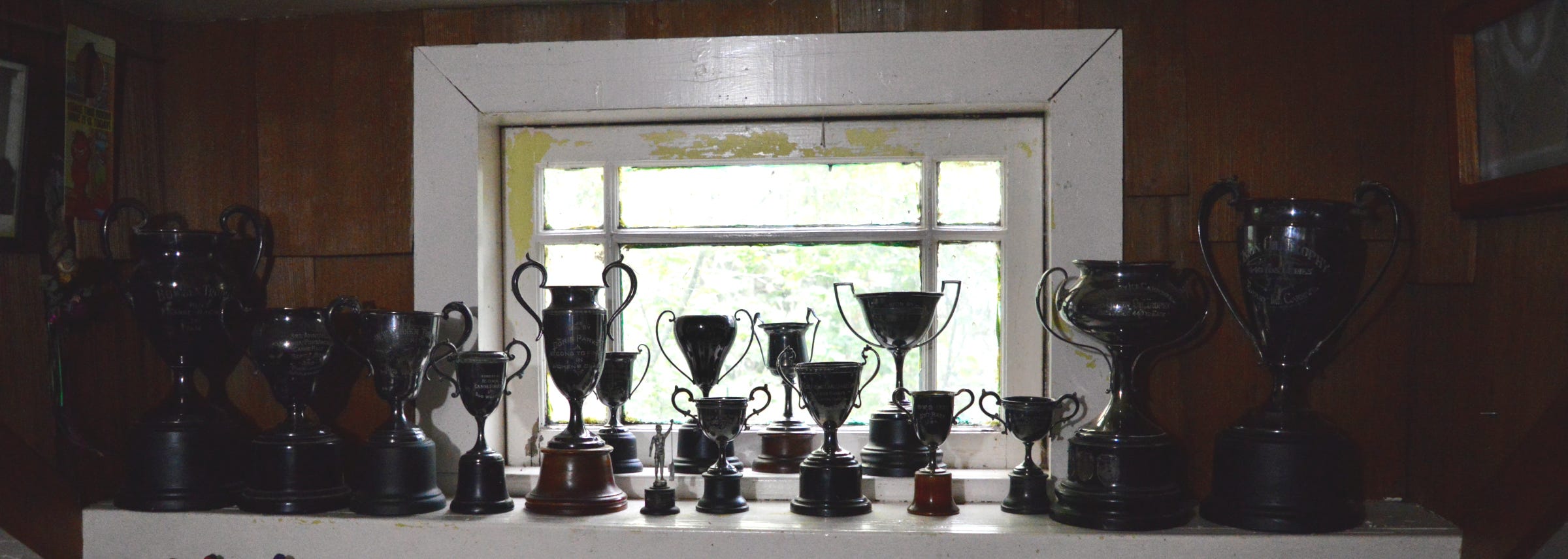
Now the trophies sit on a shelf in my brother’s old bedroom, which has been turned into an office. The Corfield Trophy from the Deep Cove Canoe Marathon, which was won three times by Doris and Bud, allowing them to keep the trophy, now holds an assortment of pens.
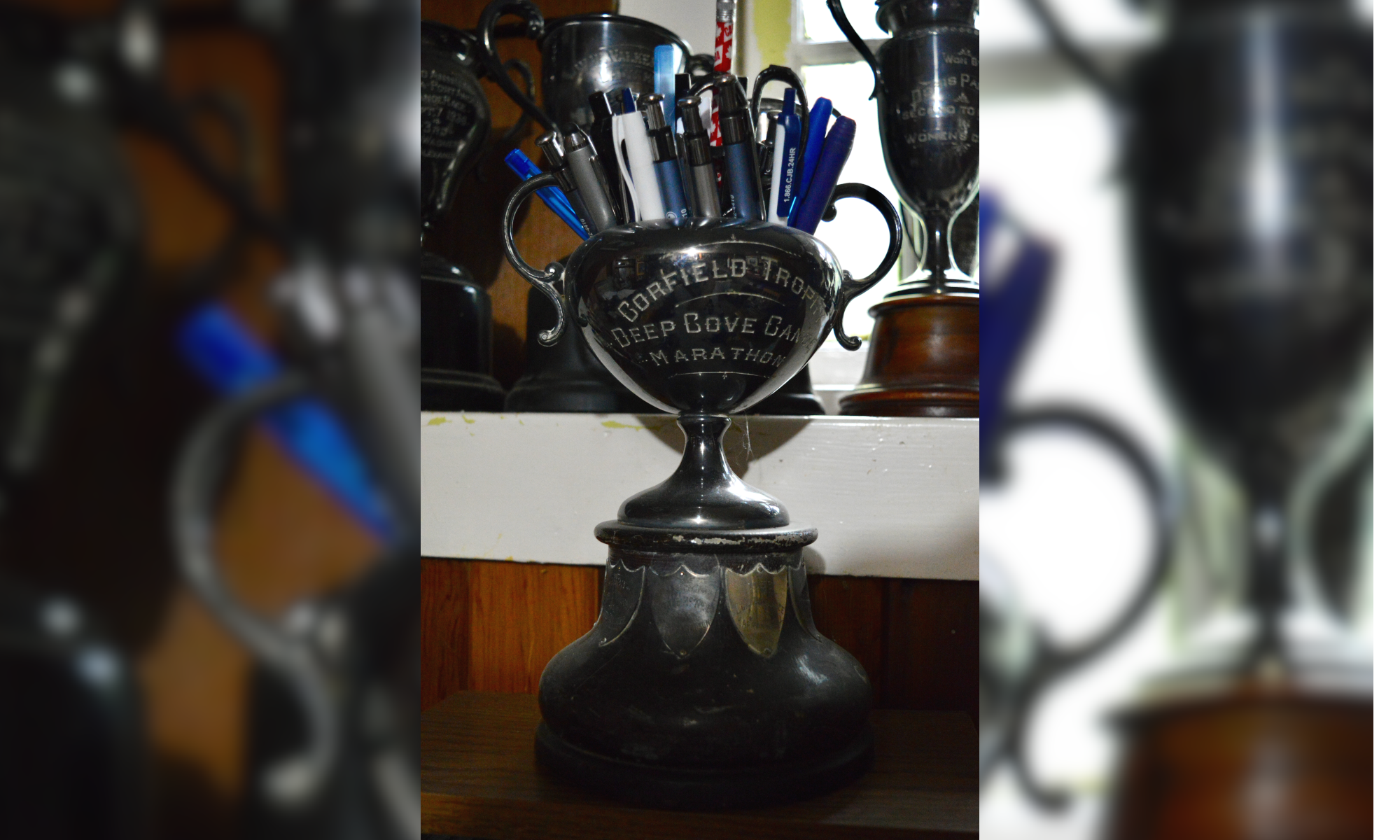
It’s the kind of collection that momentarily transforms me into Indiana Jones, declaring, “That belongs in a museum!”
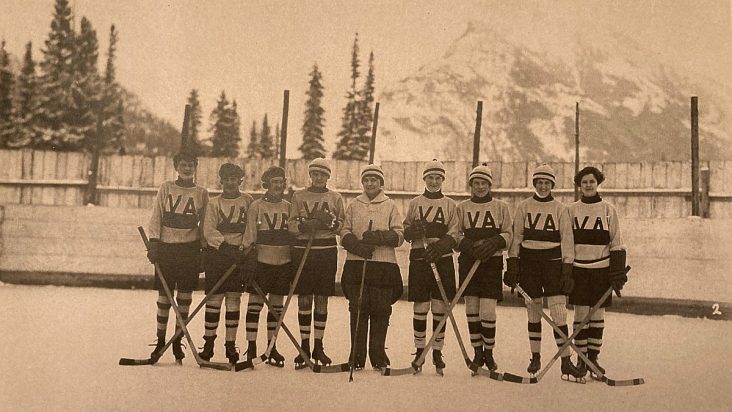
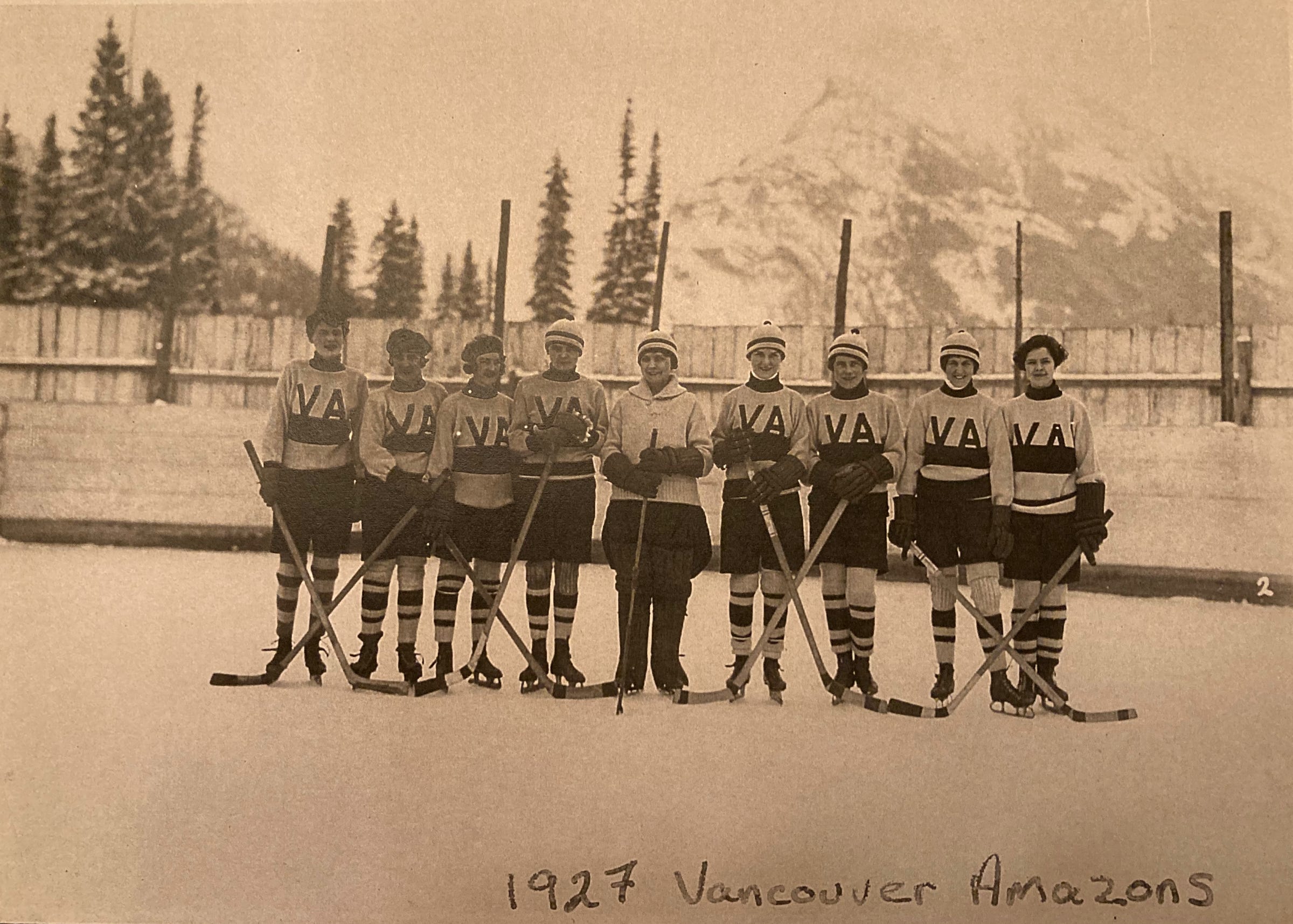
One sport she played, however, is missing from all of the trophies: hockey. And the more I looked into her time as an athlete, the more I realized that she’s one of the key figures in the history of women’s hockey in Vancouver.
But before I get to that conclusion, I need to start at the beginning.
The primary thing preventing hockey from taking hold in Vancouver in the city’s earliest days was the climate.
An 1895 article in The Province noted, “Hockey on the ice is by all odds the winter sport of the Dominion,” noting its popularity in Montreal, Ottawa, Quebec, and Toronto. The sport was played on natural ice: frozen ponds and flooded rinks in the coldest winter months.
When Lord Frederick Stanley arrived in Canada to serve as governor general, the sport of hockey was already growing in popularity. He and his family took to skating and hockey on an outdoor rink on the grounds of Rideau Hall, the official residence of the governor general.
That’s where Lord Stanley’s daughter, Lady Isobel Stanley, organized the first known game of hockey played by women around 1890, when she would have been 15 years old. She didn’t just organize it; she played in it, and a photograph of the game is the first known photo of women playing ice hockey.
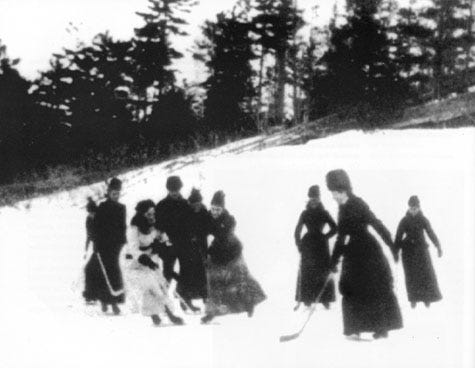
Isobel and her brothers helped influence Lord Stanley to donate the silver cup he called the Dominion Hockey Challenge Cup, which later became known as the Stanley Cup.
Frozen ponds were harder to come by in Vancouver, but when the temperatures did drop low enough, Trout Lake was a popular skating spot and hosted the occasional hockey game.
It’s unclear, however, if any of those games were played by women. While there are reports of women playing hockey games in Vancouver prior to 1911, most, if not all of them, were on grass. Vancouver women were supposedly the first to play the modern game of field hockey in 1896, and they formed the Vancouver Ladies’ Hockey Club, at times traveling across the Georgia Strait to play games against the Victoria Ladies’ Hockey Club.
In order for ice hockey to take hold in Vancouver, they needed artificial ice.
“It is a well known fact that those who would enjoy that most exhilarating of exercises, skating, in this city, are liable to be badly disappointed winter after winter if they depend on nature to supply ice,” said a letter to the editor in the October 13, 1899 edition of The Province. “A good artificial skating rink, operated on upright business lines, would be a paying thing here, and a blessing to all lovers of skating, hockey, carnivals, and the many other sports and amusements to be derived from a good sheet of ice.”
With limited access to ice in Vancouver, hockey first took root in B.C. in the interior, where frozen ponds and lakes were a little more reliable, particularly in Kootenay communities like Rossland and Nelson. And women took to the sport as readily as the men.
The Rossland Ladies’ Hockey Team was a powerhouse in those early years, dominating other squads at the annual Rossland Winter Carnival. The women wore ankle-length wool skirts and no protective equipment, which would have been considered unladylike according to the social mores of the time.
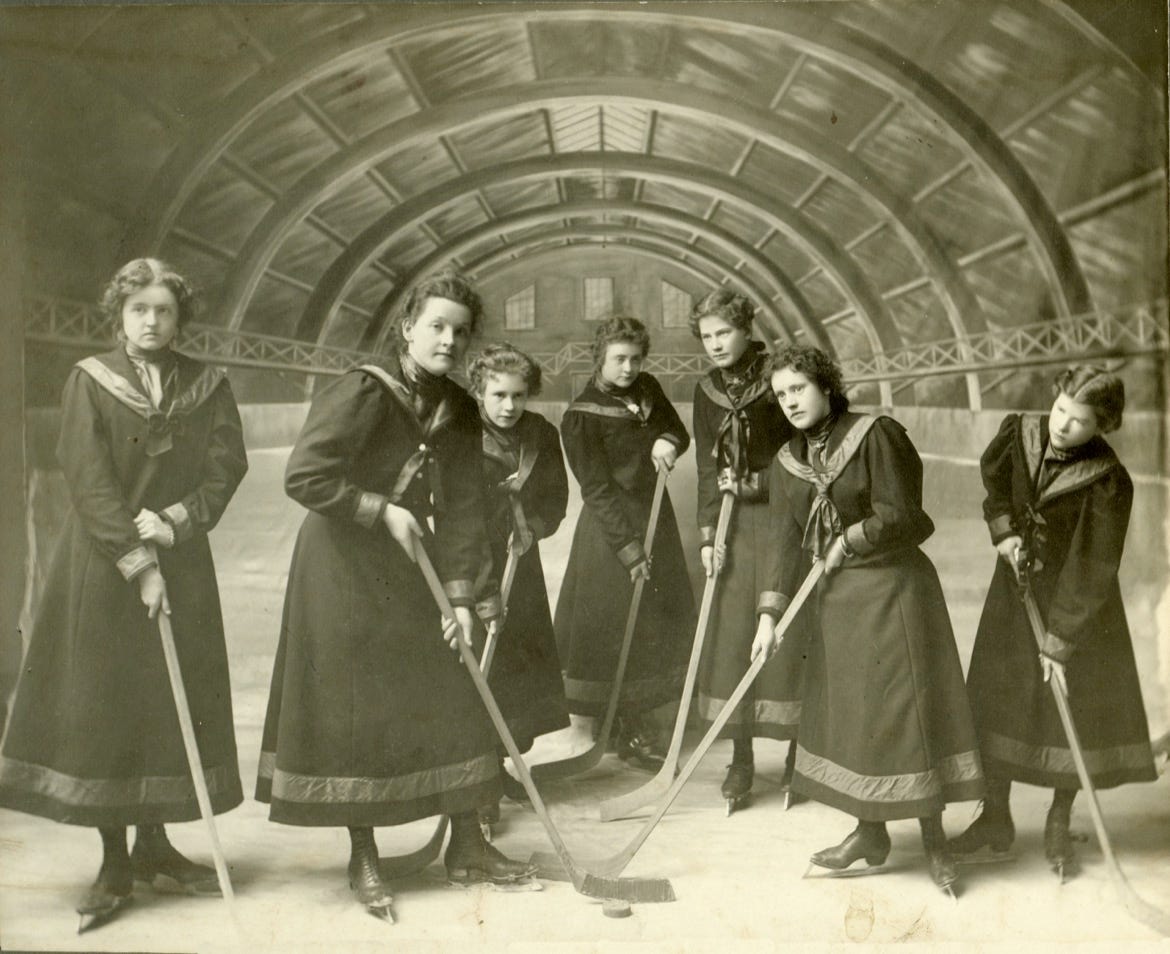
A rivalry grew between the team in Rossland and the Nelson Ladies’ Hockey Club, though it was a bit of a one-sided rivalry, with Rossland winning every game they played. But it was the popularity of the sport in Nelson that ultimately brought hockey to Vancouver.
The Patrick family moved out west to Nelson to found the Patrick Lumber Company, and they brought their love of hockey with them. Lester and Frank Patrick earned renown and induction into the Hockey Hall of Fame, but their sisters — Myrtle, Cynda, and Dora — were also passionate about hockey and joined the Nelson Ladies’ Hockey Club.
When the Patricks sold their lumber company and moved to the coast, Lester and Frank staked the family fortune on hockey. They built Denman Arena in Vancouver and Victoria Arena (later Patrick Arena or Willows Arena) in Victoria, with both opening in December, 2011.
Shortly after the arenas opened, the Pacific Coast Hockey Association (PCHA) kicked off its inaugural season in January, 1912 with three teams: the Vancouver Millionaires, Victoria Senators, and New Westminster Royals. Frank Patrick operated and played for the Millionaires, and Lester Patrick did the same for the Victoria Senators, while the Royals lacked a Patrick but won the league championship in that first year nonetheless.
It didn’t take long for women in Vancouver, Victoria, and New Westminster to establish their own teams. Whether because of the influence of their sisters or the simple financial need for more tenants for their arenas, the Patricks were early supporters of women’s hockey, staging women’s games prior to those of the PCHA or during intermissions.
In 1914, the three teams in Vancouver, Victoria, and New Westminster battled for what they deemed the “ladies’ hockey championship of B.C.,” according to the February 23, 1914 edition of The Province. That must have been news to the team in Rossland, who were in the middle of a 17-year unbeaten streak in the interior.
All three teams wore the same sweater colours as their male counterparts, with the Vancouver Ladies Hockey Team taking to the ice in the colours and logo of the Vancouver Millionaires, albeit with ankle-length skirts.
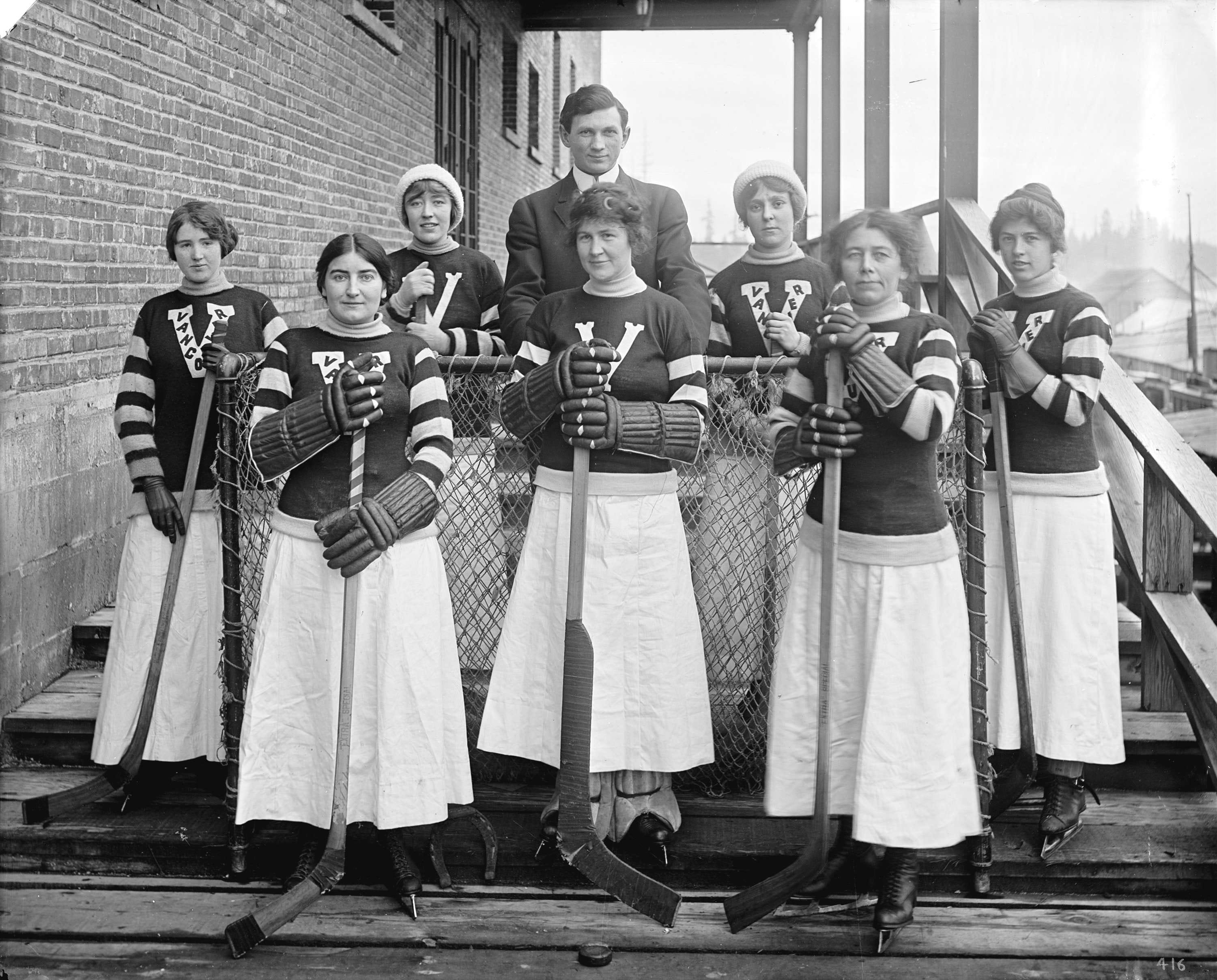
The trouble for the Vancouver Ladies’ Hockey Team was finding opponents worth playing, as the nascent ladies’ league didn’t last long. The team in New Westminster folded after two years when Queen’s Park Arena was requisitioned by the military during the First World War. A year later, the Victoria Arena was likewise requisitioned.
With no other competition in easy traveling distance, the Vancouver Ladies’ Hockey Team took to facing a varsity team of students from the University of British Columbia. In early 1917, they also formed an official club with both a senior and a junior squad, along with a new logo that separated them from the Millionaires: the Swastika Club.
While the sight of a swastika on a hockey jersey is rather alarming today, the swastika had a long history as a symbol of luck or good fortune before it was co-opted by Nazi Germany. The symbol was frequently adopted by women’s athletic clubs during this time period, including multiple hockey teams.
Along with the Vancouver Swastika Club, there were the Edmonton Swastikas and, most famously, the Fernie Swastikas, who won the Alpine Cup at the 1923 Banff Winter Carnival, which was considered at the time to be the championship of Western Canada.
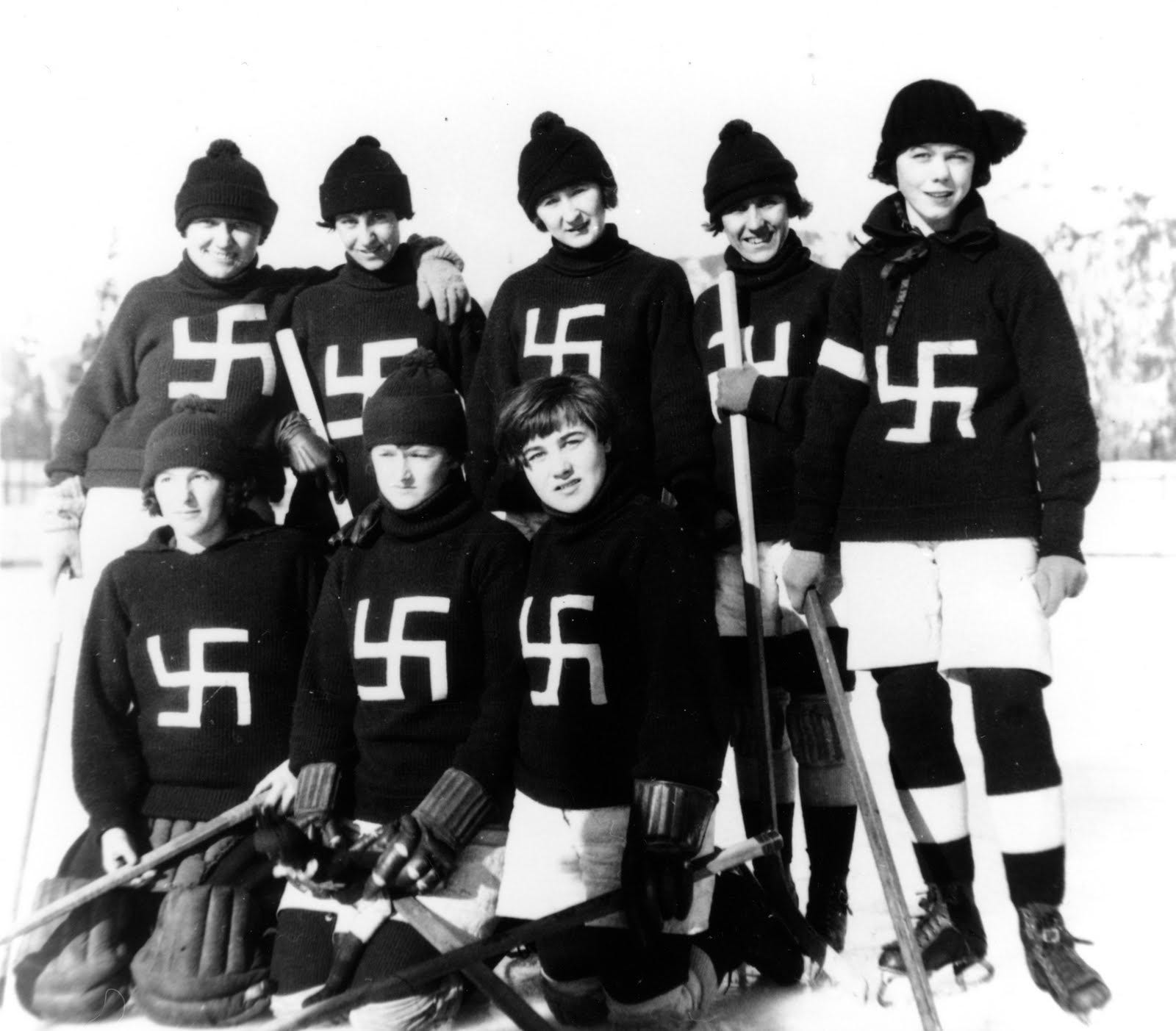
The newspapers in Vancouver frequently referred to the team as the “Swastika Girls” or “Swastika Women.”
“In New York, the great craze of the season is ladies’ hockey and Vancouver is not without its ladies’ hockey team, for two of them, the Swastika Girls and the University of British Columbia Ladies battled through two periods yesterday afternoon at the Arena to a final score of two goals each,” read a report in the Vancouver Sun from January 17, 1917.
At times, newspaper reports conflate the Vancouver Ladies’ Hockey Team and the Swastika Club as being one and the same. But, at some point they became two separate teams. For example, a schedule of hockey practices at Denman Arena published in the Vancouver Sun on Nuvember 26, 1917 listed separate practice times for the Swastika Ladies and the Vancouver Ladies.
But, as best as I can determine, the Swastika Club had its origins with the Vancouver Ladies’ Hockey Team.
In December of 1917, the Swastika Club faced the Vancouver Ladies’ Club for what was deemed the “mainland title” of women’s hockey.
“The hockey game between the Swastikas and the Vancouver ladies occasioned a lot of genuine pleasure for the fans,” read the Province report on December 22, 1917. “The girls showed plenty of pluck and took no heed whatever to some rather severe bumps and falls. Vancouver won four to two, but the game was exciting enough to please a dyspeptic.”
But both the Vancouver Ladies’ Hockey Team and the Swastika Club were soon to be unseated by a new, younger squad whose name would, fortunately, supplant the name “Swastika” in the annals of Vancouver hockey history: the Vancouver Amazons.
TO BE CONTINUED IN PART TWO







GIPHY App Key not set. Please check settings