
 Politixia
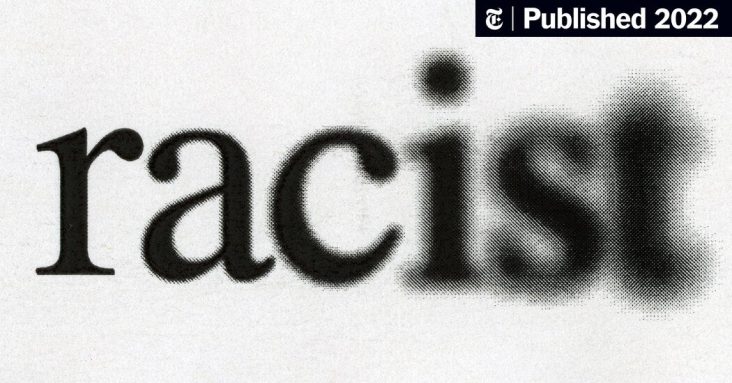

But such cases are exceptions. Most disparities between Black and white people, though they exist and are not something Black people deserve any kind of blame for, are not due in 2022 to “racism” in any sense compatible with clear and honest language.

To insist on using the term this way so challenges basic understanding that it can only encourage less discriminating observers to see it as “playing the race card,” confused by the idea that the racism of the past leaves behind a system that continues to exert that trait as if it were sentient. Calling systems, structures and institutions “racist” encourages a kind of anthropomorphization of abstract matters, which is a simplistic and even unscientific mode kind of thought.
However, I am arguing not from any authority one might associate with my being a linguist. I am pretty sure quite a few linguists will disagree with me on this. I am simply seeking a clearer and less unnecessarily loaded way of talking about racism and how we actually help people in a society riddled with inequality. Calling inequities between races “systemic racism” and the like gets in the way of that.
I think of a hypothetical people founding a town long ago, among whom acrophobia — i.e., fear of heights — was unusually common. They restricted buildings to being two stories high at most. In subsequent generations, as the population grew both locally and from immigration, acrophobia largely faded away. However, this had always been a town with limited funds, and the two-story limit has led to significant overcrowding. Imagine the town leaders making sonorous speeches referring to overcrowding and its attendant ills — below-average schools, crime, pollution — as “acrophobia” because that’s what they were traceable to in the past. You could wrap your head around using the term that way if necessary. But that would also interfere with clear and constructive discussion about what to do about the problems.
From now on, I, for one, will be referring to most of the things we are now taught to call systemic racism as being “inequities between races.” In my ideal universe, the term would quickly and inevitably be shortened to just “inequities,” with a tacit reference to Black and Latino people, just as “minority” now has the same implication. We would battle these inequities, but without the lexical mission creep which has led to how confusingly we use the word “racism” now. Less distracted by the fantasy that these inequities are embodiments of an undying bigotry in “institutional” form, we could focus more attention on genuine solutions to what is holding back real people in today’s America.
John McWhorter (@JohnHMcWhorter) is an associate professor of linguistics at Columbia University. He is the author of “Nine Nasty Words: English in the Gutter: Then, Now, and Forever” and, most recently, “Woke Racism.”





GIPHY App Key not set. Please check settings