
 Politixia
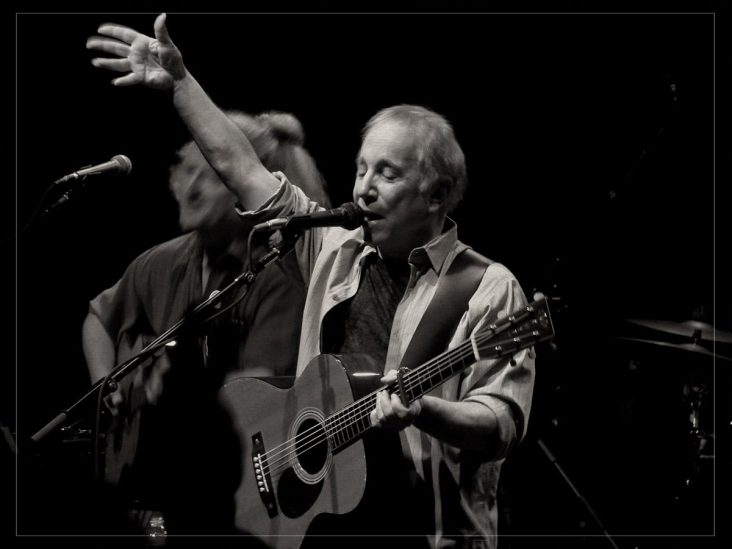
Credit: Far Out / Matthew Straubmuller
Just as his career looked set to start waning, singer-songwriter Paul Simon accidentally released his most defining album.
After cementing himself as one of the essential artists of the 1960s through his partnership with Art Garfunkel and releasing a string of successful records across the following decade, Simon had reached a creative and commercial lull heading into the 1980s. Coupled with the breakdown of his marriage to Carrie Fisher and Hearts and Bones‘ lacklustre chart performance, Simon was in serious need of some creative inspiration and renewed purpose.
Agreeing to produce a record by Saturday Night Live house band member Heidi Berg, Simon was introduced to mbaqanga township street music from Johannesburg. Becoming obsessed with the collection of Soweto jive, Simon declared to The New York Times in 1987 that the bootleg tape had a deep effect on him.
“It was very good summer music, happy music. It sounded like very early rock and roll to me, black, urban, mid-’50s rock and roll, like the great Atlantic tracks from that period,” Simon once said. “I was listening to it for fun for at least a month before I started to make up melodies over it. Even then I wasn’t making them up for the purpose of writing. I was just singing along with the tape, the way people do.”
Eager to source the artists, his Warner Bros label tracked down South African producer Hilton Rosenthal, who identified several acts, including Boyoyo Boys and Ladysmith Black Mambazo, and persuaded Simon to come to South Africa directly to collaborate. After recording his feature on the ‘We Are the World’ charity single and receiving the all-clear from the South African black musicians union, Simon headed to Johannesburg’s Ovation Studios, without a single song prepped, to record 1986’s celebrated and controversial Graceland.
Governed by a racist apartheid state that imposed brutal segregation on the black majority, Simon’s creative venture was met with fierce criticism. Prohibited by the UN, its General Assembly passed resolution 35/206, forcing “all states to prevent all cultural, academic, sporting and other exchanges with South Africa” and ordered “writers, artists, musicians and other personalities to boycott”, followed by major protest efforts in the music industry via Steven Van Zandt’s Artists United Against Apartheid and The Specials AKA’s ‘Nelson Mandela’ single.
Simon persisted with the Graceland project despite the global pressure. “I knew I would be criticised if I went, even though I wasn’t going to record for the government … or to perform for segregated audiences,” he said at the time. “I was following my musical instincts in wanting to work with people whose music I greatly admired.”

Simon’s stance was naive to the organisers challenging Apartheid, both internationally and within the region; Graceland‘s apolitical songwriting and Simon’s refusal to reach out to the ANC leadership soured whatever good intentions were had. Even worse was the appearance of country-rock singer Linda Ronstadt, who three years earlier had accepted $500,000 to play at the whites-only Sun City luxury resort.
At the time, backlash was heavy with journalist Tris McCall articulating starkly in the Star-Ledger the project’s ethical quagmire: “Does it complicate matters to realise that these musicians were second-class citizens in their own country, one groaning under the weight of apartheid? How could Simon approach them as equal partners when their own government demanded that they treat him as a superior?”
Despite the firestorm it created, Graceland was a US five-time platinum seller and revitalised his career. An album he holds deep affection for, two of the album’s biggest singles featured in Robert Hilburn’s Paul Simon – The Life biography when discussing the ten tracks that meant the most to the singer-songwriter veteran.
First was the title track, initially just a placeholder name before sticking; ‘Graceland’ was crafted from the jam sessions with guitarist Ray Phiri, fretless bass player Baghiti Khumalo, and drummer Isaac Mtshali. Using Elvis Presley’s mansion and memorial as a device to illustrate a ‘travelling’ motif, the narrator’s musing of a failed relationship has been speculated to reference Fisher and his first wife Peggy Harper, and the ‘travelling companion’ his son Harper.
This outlook was notably mature in its nature. Looking at fatherhood and the journey of life, even Joe Strummer celebrated it, saying, “I don’t like the idea that people who aren’t adolescents make records. Adolescents make the best records. Except for Paul Simon. Except for Graceland. He’s hit a new plateau there, but he’s writing to his own age group. Graceland is something new.”
The notion of expanding the horizon pop was equally true with his next pick in the form of a song about “love, imagination and poverty.” Simon’s second selection was Graceland‘s fourth single, ‘Diamonds on the Soles of Her Shoes’, featuring Zulu lyrics from Mambazo, translated as, “It’s not usual but in our days we see those things happen. They are women, they can take care of themselves,” and percussion work from a young Youssou N’Dour.
With its traditional mbube vocal backing, Simon was possibly inspired by the singing style’s association with migrant coal and diamond miners. Honouring such people was the political outlook hidden within his supposedly apolitical album.
“Here, there were no inferiors or superiors, just an acknowledgement of everybody’s work as a musician. It was a powerful statement,” Simon told National Geographic in 2012.
It’s, at the most charitable, an impossibly naive statement that ignores the material reality outside the Ovation Studios. While no doubt not actively endorsing the ruling Afrikaner National Party’s segregationist regime, and financially compensating the Black session players above the discriminatory wages they’d otherwise receive, Simon was participating in a system that elevated his power by virtue of his whiteness, whether he decided to exercise that racist imbalance or not.
Coupled with Graceland’s queasy apolitical songwriting, a colonial whiff persists on Simon’s much-loved 1986 solo LP even 40 years on, the soundtrack to an unwitting and hubristic act of cultural cover for a white supremacist ethnostate that, rather than inspiring the breakdown in such racial stratification, callow ditties like ‘Diamonds on the Soles of Her Shoes’ or ‘Graceland’ instead offered a veneer of legitimacy.








GIPHY App Key not set. Please check settings